Army ROTC scholarships and the path to a commission
Understand the program, funding and service commitment
Guidance reviewed October 1, 2026.
Army ROTC lets students prepare to become officers while pursuing a college degree.[6] The scholarship can be important, but it is only part of the decision. Look closely at the training schedule, academic expectations and service obligation before deciding whether the program fits.
Start with the whole commitment
Compare the program with your academic plans and the career you want after college. Ask what a normal week looks like and what changes during field or summer training. Make room in the decision for both the financial support and the obligation that comes with it.
What Army ROTC offers
The Army describes ROTC as a college-based route to commissioning, with military science instruction, physical training and field experience.[6] Scholarship support can cover tuition and fees or room and board, with additional book and living support under current terms.[11] Confirm the details of the award you are considering.
Learn about the program at your school
A national overview cannot tell you everything about the campus experience. Meet the cadre, ask about the schedule and speak with current cadets if possible. The program should make sense alongside the degree you intend to complete.
Read the numbers carefully
GoArmy says ROTC is offered at more than 1,000 colleges and universities.[6] That describes access, not your chance of receiving a scholarship. This guide does not repeat unsupported national award rates or percentages of officers commissioned through ROTC.
How to begin
- Find a participating school.
- Contact its Recruiting Operations Officer.
- Review the current scholarship or enrollment route.
- Check academic, medical and fitness requirements.
- Discuss the service obligation before accepting an offer.
The Army's scholarship page is the starting point for current application dates and requirements.[11]
What to expect during college
The Army describes classroom and lab work alongside physical and field training.[6] Ask the local program for its actual schedule instead of assuming every school holds the same number of weekly PT sessions. Plan around your degree requirements as well as ROTC.
Understand when an obligation begins
The Army distinguishes Basic Course enrollment from accepting a scholarship or entering later commitments.[6] Scholarship acceptance carries service obligations that depend on the award and path.[11] Ask the Recruiting Operations Officer to explain your documents and resolve questions before you sign.
The course sequence
The program generally moves from the Basic Course to the Advanced Course, with camp requirements and alternative entry routes.[6] Your timing may differ if you transfer, enter later or follow another approved path.
Freshman year: learn the routine
Use the first year to understand the classes, training and expectations. Ask for help early if the schedule conflicts with an academic requirement. Do not assume a scholarship decision and course enrollment are the same administrative step.
Sophomore year: confirm the next stage
Discuss the route into the Advanced Course. The Army describes Basic Camp as an accelerated alternative for students who need that preparation.[6] Ask whether it applies to your path rather than assuming every sophomore attends.
Junior year: prepare for greater responsibility
The Advanced Course includes more advanced instruction and preparation for further training.[6] Review your remaining requirements with cadre and keep track of academic progress, training and administrative deadlines.
Senior year: check completion requirements
Confirm the status of your camp, academic and commissioning requirements. The Army describes Advanced Camp as a required leadership-training event; do not assume it always occurs after senior year.[6] Work from your approved individual timeline.
How to contribute as a cadet
Prepare for class, follow through on assigned work and ask for feedback. Treat peers respectfully and take academic responsibilities seriously. Fitness matters, but a single test score does not describe the whole person you are preparing to become.
The scholarship path
Separate eligibility, selection and acceptance. Being eligible to apply does not mean an award is guaranteed, and accepting an award brings terms you need to understand.
What funding may cover
The Army's scholarship page describes tuition and fees or room-and-board support, plus allowances under current program terms.[11] Ask which costs your award covers and which remain yours. Do not substitute an old blog's dollar figures or acceptance-rate estimate for the award documents.
At this review, GoArmy lists $420 a month during the school year for expenses and $1,200 a year for books with ROTC scholarships.[11] Confirm the terms of your award before including that support in a college budget.
Keeping funding and meeting requirements
Ask cadre to explain ongoing academic, conduct, medical and training requirements. If your circumstances change, discuss them promptly. Do not assume an injury automatically causes repayment or that leaving the program always has the same consequence; your agreement and applicable process matter.
Compare programs by service
Army ROTC is one route; Air Force and Naval ROTC have their own programs and terms. The Coast Guard link retained below concerns CSPI, not an Army-style ROTC program. Read each service's information separately instead of treating every scholarship as the same offer.
After graduation
Commissioning is a transition into the next set of responsibilities. Ask cadre what happens between completing college and beginning the training or assignment associated with your path.
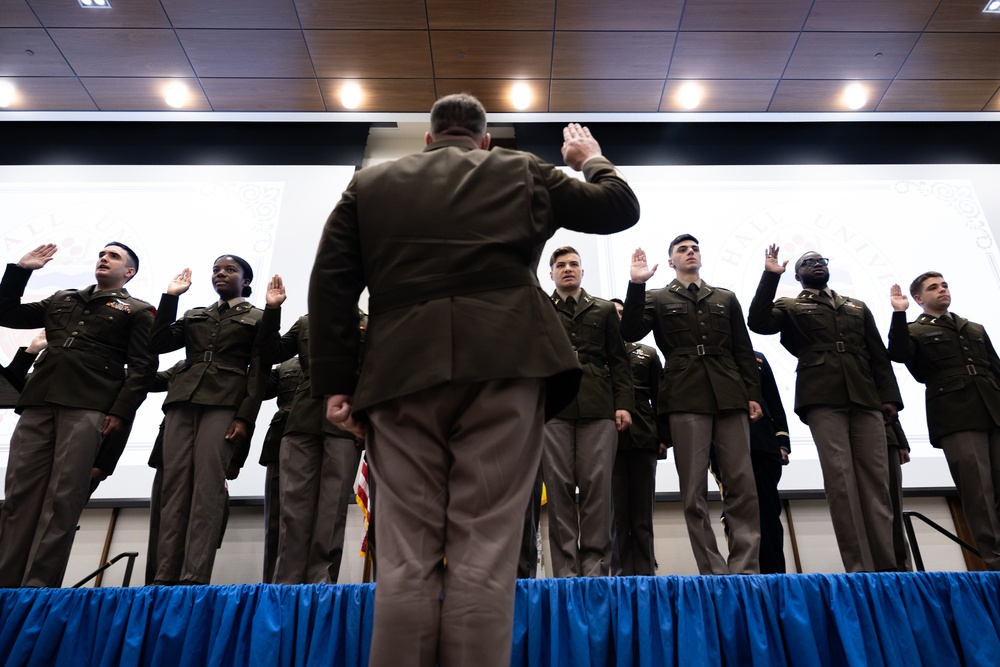
The commissioning ceremony
The Army describes successful ROTC graduates commissioning as second lieutenants.[6] Confirm the requirements and paperwork before focusing on ceremony plans. Completing the degree alone does not establish that every commissioning condition is satisfied.
Branch selection
Ask cadre to explain the current selection process and what you can influence. Do not assume a simple top-three preference list or a particular fitness score guarantees a branch. Keep your preferences informed by the work each branch involves.
Basic Officer Leader Course
The Army describes BOLC as follow-on preparation for the officer's career.[6] Ask about the course and timing for your branch rather than relying on a generic duration.
Active Duty or a Reserve Component
Army ROTC can lead to service in the Regular Army, Army Reserve or Army National Guard.[6] Your award, eligibility and selection process affect the route. Do not assume the component is an unrestricted choice made at graduation.
Where ArmyFit can help
ArmyFit lists score calculators, event instructions, timers and bodyweight programs.[17] Use these as preparation tools if they help your routine. They do not determine scholarship selection, branch assignment or commissioning eligibility.
Start with the school and the written requirements
Contact the Recruiting Operations Officer at a school you are considering. Bring questions about academics, funding, medical and fitness requirements, the service commitment and the next application deadline. Leave with a clear list of what you need to do next.
References and earlier reading
Links carried forward from this article are listed for further reading, not as verification of current policy or of the claims in earlier editions. Consult the checked sources below for the revised guidance.
- U.S. Army resource (1)
- ArmyFit (2)
- serviceacademyforums.com (3)
- Related Troopsy article (4)
- GoArmy resource (5)
- afrotc.com (6)
- gocoastguard.com (7)
- armyrotc.army.mil (8)
- armyrotc.army.mil (9)
- armyrotc.ufl.edu (10)
- bestcolleges.com (11)
- collegerecon.com (12)
- sgp.fas.org (13)
- GoArmy resource (14)
- rotcconsulting.com (15)
- af.mil (16)
- U.S. Army resource (17)
Sources
[6] https://www.goarmy.com/careers-and-jobs/find-your-path/army-officers/rotc — Army ROTC [11] https://www.goarmy.com/careers-and-jobs/find-your-path/army-officers/rotc/scholarships — Army ROTC Scholarships [17] https://www.army.fit — ArmyFit product features
Credits
Photo: Sgt. Seth Cohen / DVIDS. 06.04.2025.
The appearance of U.S. Department of War (DoW) visual information does not imply or constitute DoW endorsement.