10 Army jobs to consider when planning a civilian career
Look at the skills, then check the credentials
An Army job can give you experience worth building on after service. The useful question is how that experience matches the work you want to do next. Start with an occupation, compare its requirements with your training and identify any credential or education gap. These ten specialties are starting points for research, not a ranking of guaranteed outcomes.
Ten MOSs and possible civilian directions
Use the Army's current job catalog to confirm specialty names and requirements.[10] Treat the civilian roles below as directions to investigate. A related Army job does not automatically qualify you for a regulated profession or a particular level of responsibility.
1. 25B: information technology
Look at IT support, systems administration and network-support roles. Compare job descriptions with the systems you actually supported, and describe that work clearly on your resume. Verify whether an employer requires a specific certification rather than assuming your MOS substitutes for it.
2. 68W: medical experience
Emergency medical services may be a relevant starting point. Check the credential and licensing requirements where you intend to work. Nursing, physician-assistant practice and other clinical professions should be treated as separate education and qualification paths, not automatic civilian equivalents.
3. 12B: engineering-related field work
Consider how your experience relates to construction operations, equipment use, safety and team supervision. Compare that background with entry requirements for the actual job. Do not present combat-engineer experience as a civil-engineering degree or professional license.
4. 15T: helicopter maintenance
Aviation maintenance is a sensible field to investigate. Gather training records and document the maintenance work you performed. Ask the relevant certification authority and prospective employer how they evaluate military experience before paying for additional training.
5. 35F: analysis
Look for work that uses research, briefing, written analysis and the ability to assess incomplete information. Explain the methods and responsibilities you can discuss without disclosing protected information. A past clearance is not a job offer, and an analyst title may mean different work at different employers.
6. 91B: vehicle maintenance
Fleet maintenance and repair roles may offer a useful comparison. Describe the vehicles, diagnostic tools and maintenance responsibilities you know. Check which civilian equipment, inspections or certifications you would need to learn.
7. 42A: personnel administration
Personnel records, administrative coordination and customer support can be useful experience for civilian HR work. Compare your background with the role's payroll, hiring or benefits responsibilities. Avoid treating a broad military workload as proof that you already know every civilian HR system.
8. 31B: policing and security
Public-safety and security work may be worth exploring, but evaluate each employer's selection process. Ask about academy requirements, licensing and any credit for military training. Military experience is part of your application, not a reason to skip the civilian requirements.
9. 25S: satellite communications
Compare your experience with telecommunications installation, operations and maintenance jobs. Separate hands-on technical skills from engineering roles that may require a degree or other qualifications. Be specific about equipment and troubleshooting experience you are permitted to discuss.
10. 88M: transport and logistics
Investigate commercial driving, fleet operations and logistics support. Check the licensing rules for the state and vehicle class you intend to work in. Do not assume a military vehicle qualification automatically becomes a civilian commercial driver's license.
Resources for your next move
Build a short list of target jobs before collecting courses and credentials. That gives you a reason for each training expense and a way to measure whether it closes a real gap.
Tools to compare requirements
Use the retained links to Army COOL, TAP, VA education resources and civilian job-matching tools as research starting points. Confirm eligibility and current program terms directly. A resource listing here is not a promise of funding or placement.
Start before your final months
Give yourself time to compare options, gather records and ask questions. Contact your transition office early for the milestones that apply to your separation date. Keep a written list of applications, deadlines and documents you still need.
Who to talk to
Bring different questions to the right people: career counselors for Army options, transition staff for the separation process, education staff for training choices and employers or licensing bodies for civilian requirements. Ask for the current written criteria when an answer affects a commitment.
Check programs before building plans around them
Internships, mentorships and credential programs can be worth exploring. Confirm approval requirements, availability and eligibility before assuming you can participate. Leave room for a different route if your first choice is unavailable.
Evaluate employers by the role
A recognizable employer or a veteran-hiring page is a starting point, not evidence of a suitable vacancy. Read the job description, location, schedule and pay range. Ask how the role uses your experience and what training the employer provides.
Additional reading
The links below cover career research, education and transition support. A resource page is not a current offer of funding, placement or program admission. Check the provider's own information before applying or spending money.
Choose a direction you can explain
Pick a civilian role, identify the requirements you meet and write down the gaps. Then take that list to a transition adviser. A clear plan is more useful than a salary range attached to an MOS.
References and earlier reading
Links carried forward from this article are listed for further reading, not as verification of current policy or of the claims in earlier editions. Consult the checked sources below for the revised guidance.
- cool.osd.mil (1)
- dodtap.mil (2)
- VA resource (3)
- socialimpact.linkedin.com (4)
- U.S. Army resource (5)
- skillbridge.osd.mil (6)
- ivmf.syracuse.edu (7)
- acp-usa.org (8)
- thehonormovement.org (9)
- U.S. Army resource (10)
- careeronestop.org (11)
- militaryonesource.mil (12)
- hireheroesusa.org (13)
- warrior-scholar.org (14)
- missioncontinues.org (15)
- bls.gov (16)
Sources
[10] https://www.goarmy.com/careers-and-jobs/browse-jobs — GoArmy: Careers and Jobs
Credits
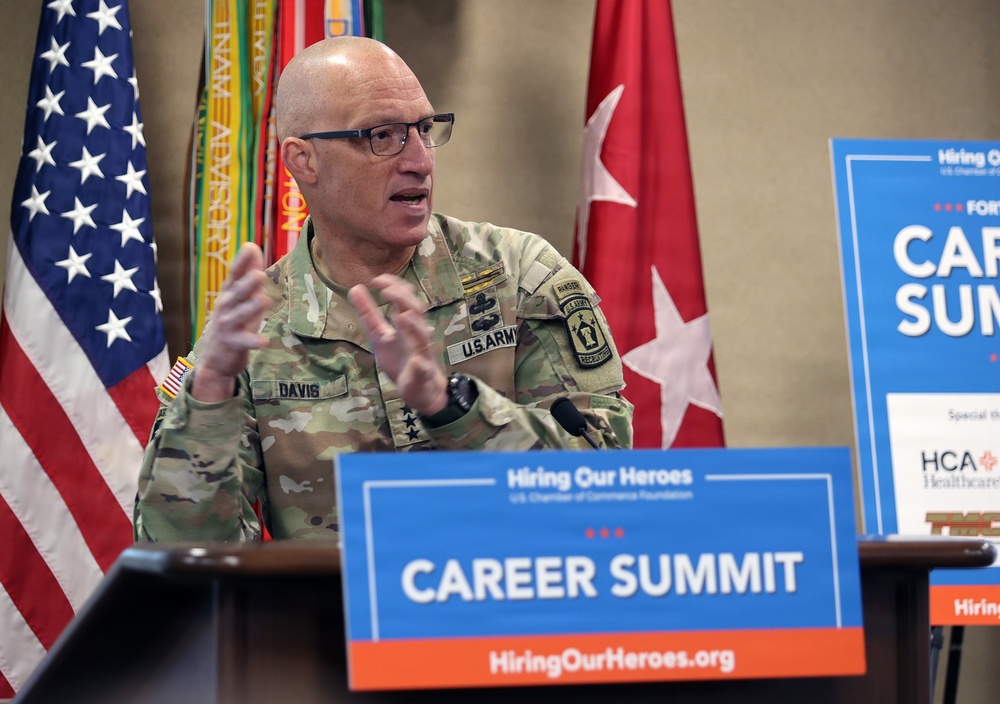
Photo: Eric Pilgrim / DVIDS. 09.22.2026.
The appearance of U.S. Department of War (DoW) visual information does not imply or constitute DoW endorsement.